The Art of Expectation
In the faith journey, many have professed with their mouths what their hearts do not believe. They do this mainly to participate in the tradition or norm of their local church or to be recognized as positive talkers.
Many people speak 'Christianese,' but their hearts may not understand the language. Until your subconscious is in an expectant state, you will not receive it.
Some are not expectant because they don't believe it will come. Worse are those who believe it will or can happen for others but not for them. This feeling continues to dim our faith lamp indirectly by crushing our expectations from GOD.
The Agricultural Illustration
A farmer who invests hours into tilling his land does so with the expectation that there will be a harvest. The same agricultural illustration is brought to our notice in I Corinthians 9:10: "...he that ploughs ought to be ploughing in expectation, and; he that threshes should be a partaker of his expectation."
Understanding Biblical Expectation
Of the three Greek words translated in the New Testament by "expect," prosdokao, meaning to look forward toward what will probably occur, whether in hope or dread (Acts 3:5; Luke 3:15), is not as intense as ekdechomai (Hebrews 10:13), meaning to wait for the realization of what one is assured of ("as the husbandman waits for the processes of Nature (James 5:7), and the patriarchs for the Divine promise," Westcott), or as vivid as the noun apokaradokia (Romans 8:19; Philippians 1:20, "earnest expectation"), which describes the stretching forth of the head toward an anticipated object.
Most of what I am writing about today concerns the verb, 'ekdechomai.' There is something about its meaning that says 'it must happen.' Expectations keep us in a steady place of readiness. Expectation fosters hope. Hope is the most essential tool in any journey. It's an anchor that hooks you to the coming good. The expectation is the small voice that says, "It is going to happen to me."
Expecting the Best
People often spend their lives wondering: What is the worst thing that could happen to me? They fill their minds with this, and it influences their whole life. Now, what can go wrong today? This has gone wrong, that has gone wrong, there must be a third disaster somewhere! And they usually get what they expect — the worst. But what does the Bible teach?
The Bible teaches that we should expect the best. Here again is an area where we must adjust our thinking to align with God's Word. If we are going to see the promised result, it will not come by expecting the worst, but by expecting the best. Always expect the best!
The Lesson from Paul's Shipwreck
In Acts chapter 27, there is a record of the shipwreck during Paul's enforced journey to Rome. After describing the fury of the hurricane battering the ship, the Bible recounts how the people onboard had their eyes on the circumstances around them: no sun or stars to guide them, just the tempest blowing day after day, and they lost all expectations. When they looked at this situation, the record states that all expectation of being saved was then taken away. Who took it away? They did — they removed it from their minds.
Look at verse 25 (this is Paul speaking): "Wherefore, sirs, be of good cheer: For I believe GOD..." Be of good cheer? That shows expectation!
Rejoicing in Expectation
Romans 12:12 gives a vital key to understanding expectation. The first clause of this verse is packed with truth: "Rejoice in expectation." Rejoicing is a repeated experience of joy.
It's also about being so excited about what you are about to receive that you're on tiptoe waiting for it to arrive. This enthusiasm is not based on outside circumstances but by renewing our minds to the greatness of GOD's Word.
It's not about sitting there with a straight face and a sour look, saying, "Yes, I'm expecting the answer." There's rejoicing in expectation; there's a thrill because you see the Word come alive.
God: The God of Expectation
Romans 15:13 declares GOD to be "the GOD of expectation." GOD is characterized by this attitude of expectation. "Now the GOD of expectation fill you with all joy and peace in believing, that you may abound in expectation..."
To abound means to be overabundant in number or measure. Expectation isn't just saying every morning, "Today is the day," then forgetting about it the rest of the day. This verse encourages rejoicing, abounding, and enthusiasm — it becomes a true expectation.
Expectation is definitely not dull or serious! Rejoicing in expectation means having some emotion involved. You bring the excitement — the expectation.
Holding Fast Our Confession
How do we show our expectations? Notice Hebrews 10:23: "Let us hold fast the confession of our expectation without wavering; (for he is faithful that promised)." Two things are clear: first, it is possible to waver.
It's very possible because others around you will try to sway you from the Word—that's satan at work. Don't waver!
Protection from wavering doesn't come automatically at salvation; it takes effort. You and I have the privilege of deciding whether to hold fast. It's a powerful truth because God has never asked you to do anything impossible.
The word "confession" here is a translation of the Greek word homologia—homo means "like" and logia comes from logos, "a word or saying." Confession isn't what we usually understand as a "professing" because that can imply pretending. Here, it means "to say a like word," or, as I like to say, "to agree with the Word."
A similar form in Romans 10:10 states: "With the mouth, confession is made unto salvation."
Your expectation will show itself in your speech and actions—your talk and walk. Everything you do will reveal whether you are expecting what God promised in His Word or doubting its fulfillment.
Why hold fast? "For he is faithful that promised." You must speak what the Word says, not what circumstances, the economy, your spouse, friends, or neighbors say. This is a vital way to demonstrate your expectation.
Adventurously Expectant
'Wait anxiously for good' // Micah 1:12
Also, Romans 8:15-17 in the Message Bible describes this life: "This resurrection life you received from GOD is not a timid, grave-tending life. It's adventurously expectant, greeting God with a childlike "What's next, Papa?" GOD's Spirit touches our spirits and confirms who we are. We know who he is, and we know who we are: Father and children. And we know we are going to get what's coming to us—an unbelievable inheritance! We go through exactly what Christ goes through. If we go through the hard times with him, then we'll also go through the good times with him!"
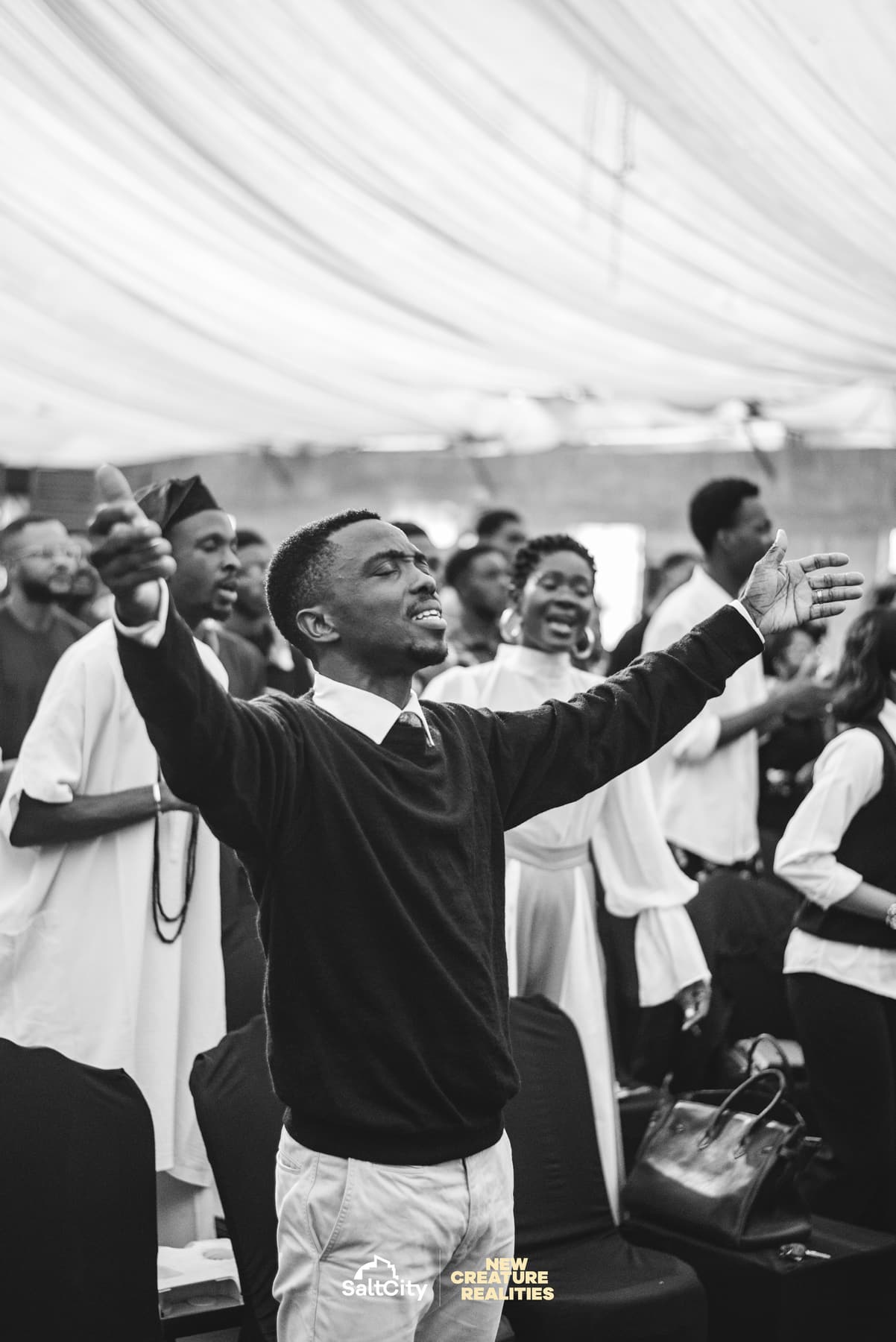
Notice the phrase "adventurously expectant." There's something about the art of expectation—it's about foreseeing miracles. Practice stretching forth your hands and asking, "What's next, Papa?"
On its own, expectation puts you in a great place to receive. It fosters incurable optimism.
Expect greatness. It's happening. It's happening to me.
— Tobore David
Join the conversation
What did this stir in you? Share your thoughts with the SaltCity family.
Comments
About Tobore David
Tobore David is the Lead Pastor of SaltCity Church, Warri, sharing teaching on faith, the Spirit, and practical Christian living.
Ready to Take the Next Step?
Join us for service, connect with a community, or explore more resources to grow in your faith journey.